
Regenerative Medicine Courses Online: Understanding Tissue Engineering and Its Role in Regenerative Medicine
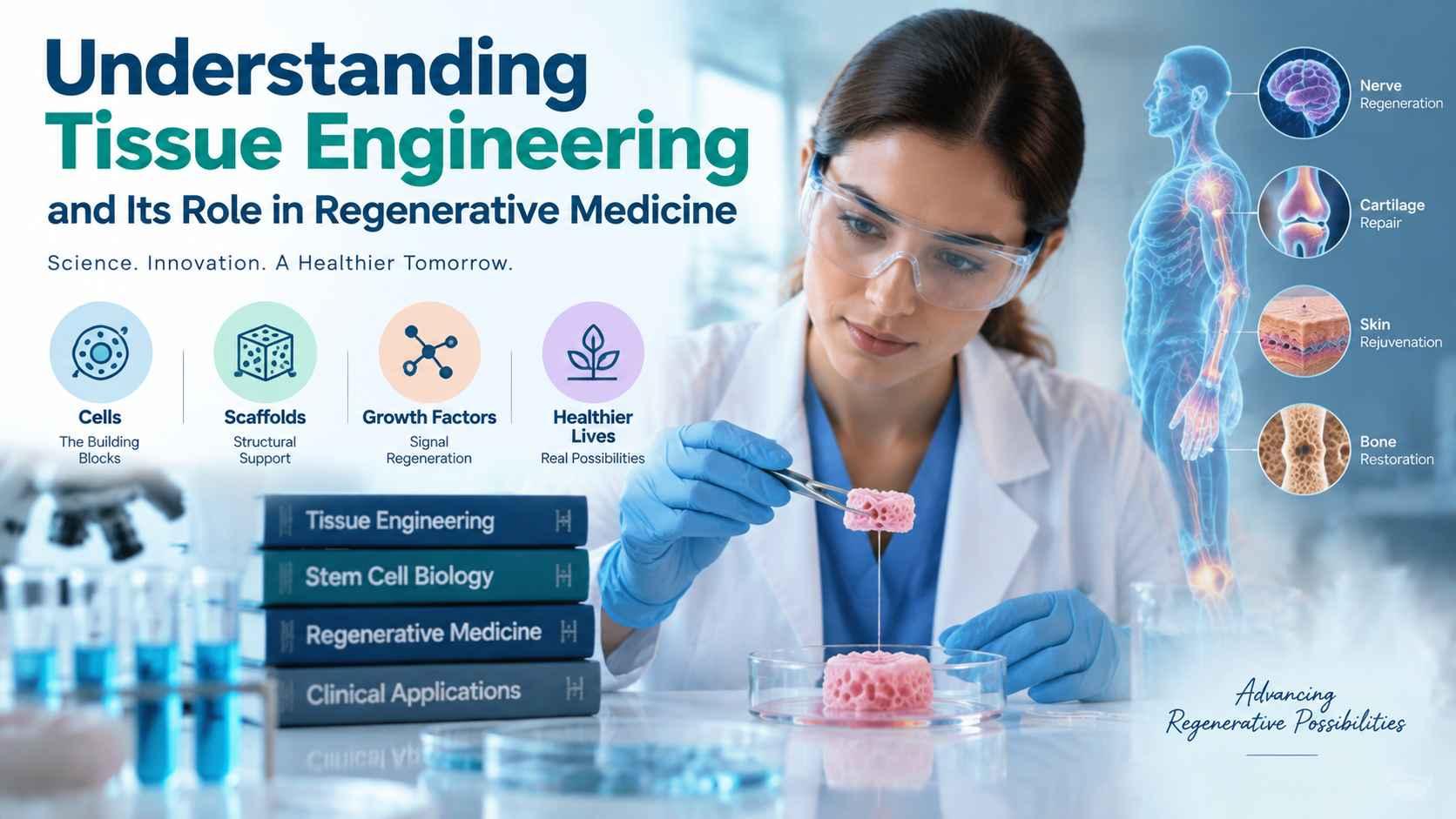
Regenerative medicine is one of the most rapidly developing areas in modern healthcare, combining biology, engineering, and clinical science to explore new approaches for repairing damaged tissues and supporting natural healing processes. Among its most important disciplines, tissue engineering plays a critical role by focusing on the development of biological substitutes that can restore, maintain, or improve tissue function.
For healthcare professionals, understanding tissue engineering is becoming increasingly important as regenerative technologies continue to influence fields such as orthopedics, wound care, dentistry, and aesthetic medicine. Physicians, registered nurses, nurse practitioners, physician assistants, dentists, and medical students need a strong foundation in cellular biology, biomaterials, and regenerative principles to evaluate emerging applications responsibly.
Professionals who want to build specialized knowledge in this evolving field often explore regenerative medicine courses online to understand the scientific foundations, clinical concepts, and future possibilities of regenerative healthcare.
What Is Tissue Engineering in Regenerative Medicine?
Tissue engineering is a multidisciplinary field that combines cells, biomaterials, and biological signals to create solutions that support tissue repair and regeneration. Unlike traditional medical approaches that primarily replace damaged tissues with artificial materials, tissue engineering aims to encourage biological restoration by working with the body's natural healing mechanisms.
The field integrates knowledge from several scientific areas, including:
-
Cell biology
-
Molecular biology
-
Biomedical engineering
-
Materials science
-
Immunology
-
Clinical medicine
The primary goal of tissue engineering is to develop functional tissues that can help restore normal biological activity after injury, disease, or degeneration.
Researchers and healthcare professionals study how cells interact with their environment, how tissues develop, and how biological structures can be supported through advanced technologies.
The Relationship Between Tissue Engineering and Regenerative Medicine
Although tissue engineering and regenerative medicine are closely connected, they are not identical. Regenerative medicine is the broader field focused on restoring damaged tissues and organs through biological approaches, while tissue engineering is one of the major strategies used within this field.
Regenerative medicine may involve:
-
Stem cell-based therapies
-
Growth factor applications
-
Cellular signaling research
-
Gene-based approaches
-
Tissue engineering methods
-
Biomaterial development
Tissue engineering contributes by creating supportive environments where cells can grow, organize, and potentially develop into functional tissue structures.
For example, researchers may use scaffolds made from natural or synthetic materials to provide structural support for cells. These scaffolds can mimic aspects of the body's extracellular matrix, allowing scientists to study how tissues regenerate.
The Importance of Regenerative Medicine Courses Online for Healthcare Professionals
As regenerative medicine continues to advance, healthcare professionals require updated education to understand scientific developments and their potential clinical relevance.
Regenerative medicine courses online provide flexible learning opportunities for healthcare professionals who want to expand their understanding of regenerative concepts while continuing their professional responsibilities.
Online education can help learners explore important areas such as tissue engineering principles, cellular therapies, regenerative biology, and clinical applications. These programs are particularly valuable for professionals who may not have access to specialized in-person training programs.
When selecting an educational pathway, healthcare professionals should consider:
-
Scientific accuracy of course material
-
Relevance to healthcare practice
-
Instructor expertise
-
Coverage of current research
-
Focus on evidence-based approaches
A strong educational foundation helps professionals understand both the opportunities and limitations of regenerative technologies.
Key Components of Tissue Engineering
Tissue engineering typically relies on three primary components: cells, scaffolds, and biological signals. Together, these elements create an environment that supports tissue development and repair.
Cells
Cells are fundamental to tissue engineering because they provide the biological foundation for regeneration. Researchers study different cell types, including stem cells and specialized cells, to understand their ability to develop into various tissue types.
Stem cell research has become an important area within regenerative medicine because of the potential ability of certain cells to differentiate into specialized tissues.
Biomaterial Scaffolds
Scaffolds provide structural support for growing tissues. They can be designed using various materials, including natural polymers, synthetic materials, and advanced biomaterials.
An effective scaffold should ideally:
-
Support cell attachment
-
Allow nutrient movement
-
Encourage tissue development
-
Degrade safely when appropriate
The design of biomaterials continues to be an important area of research in tissue engineering.
Growth Factors and Signaling Molecules
Cells communicate through complex biological signals that influence growth, repair, and differentiation. Growth factors and signaling molecules help researchers understand how tissues develop and how regenerative processes can potentially be enhanced.
Understanding these biological mechanisms allows scientists and clinicians to explore more targeted regenerative strategies.
Clinical Applications of Tissue Engineering
Tissue engineering research has influenced several areas of healthcare. While many applications continue to develop, professionals are exploring its potential across different specialties.
Orthopedics and Musculoskeletal Care
Tissue engineering has significant relevance in musculoskeletal medicine, where researchers study approaches for supporting bone, cartilage, and connective tissue repair.
Healthcare professionals interested in these applications need knowledge of tissue biology, injury mechanisms, and evidence-based treatment considerations.
Dental Regeneration
Dentistry is another field where regenerative principles are being explored. Tissue engineering concepts may contribute to research involving periodontal tissues, bone regeneration, and oral healing processes.
Dental professionals can benefit from understanding how biological repair mechanisms influence future dental therapies.
Wound Healing
Researchers continue to investigate tissue engineering approaches for improving wound management. Advanced materials, cellular approaches, and biological signals are being studied to support tissue recovery.
Understanding these concepts allows healthcare professionals to better evaluate emerging wound care technologies.
Aesthetic and Skin Regeneration
Regenerative approaches have gained interest in aesthetic medicine, particularly in areas related to skin quality, tissue health, and biological rejuvenation.
Professionals working in aesthetic healthcare must understand scientific evidence, patient expectations, and safety considerations when evaluating regenerative approaches.
The Role of Regenerative Medicine Training in Clinical Knowledge Development
As regenerative medicine becomes more integrated into healthcare discussions, professionals need structured education to interpret scientific findings and understand clinical applications.
Regenerative medicine training helps healthcare providers develop knowledge about:
-
Cellular mechanisms
-
Tissue repair processes
-
Clinical research
-
Patient considerations
-
Ethical responsibilities
-
Emerging technologies
For physicians, nurses, physician assistants, dentists, and other healthcare professionals, education provides the foundation needed to engage with regenerative medicine responsibly.
Why Regenerative Medicine Certification Matters
A regenerative medicine certification can demonstrate a professional's commitment to continuing education and specialized knowledge development.
However, certification should complement clinical experience rather than replace professional judgment. Healthcare providers must continue evaluating scientific evidence, regulatory guidance, and patient-specific factors.
A comprehensive certification pathway should include scientific principles, clinical applications, safety considerations, and current developments in regenerative medicine.
Future Directions of Tissue Engineering and Regenerative Medicine
The future of tissue engineering is closely connected with advancements in biotechnology, personalized medicine, and cellular research.
Emerging areas include:
-
3D bioprinting
-
Personalized regenerative therapies
-
Advanced biomaterials
-
Artificial tissue development
-
Improved cellular technologies
As research progresses, healthcare professionals will need continuous education to understand how these innovations may influence future patient care.
Structured programs such as those provided by ABACT help eligible healthcare professionals explore regenerative medicine concepts through organized learning pathways designed around scientific understanding and professional development.
Conclusion
Tissue engineering represents one of the most promising areas within regenerative medicine, combining scientific discovery with innovative healthcare approaches. Understanding how cells, biomaterials, and biological signals interact provides healthcare professionals with valuable insight into the future of tissue repair and restoration.
For professionals seeking to expand their expertise, regenerative medicine courses online offer a flexible opportunity to explore tissue engineering, regenerative biology, and emerging clinical applications. Through ongoing regenerative medicine training and advanced education, healthcare providers can remain prepared for the continued evolution of this exciting field.
Frequently Asked Questions (FAQs)
1. What is tissue engineering in regenerative medicine?
Tissue engineering is a branch of regenerative medicine that combines cells, biomaterials, and biological signals to develop approaches for supporting tissue repair and regeneration.
2. How is tissue engineering different from regenerative medicine?
Regenerative medicine is a broad healthcare field focused on restoring damaged tissues, while tissue engineering is one approach used within regenerative medicine to create biological structures and support tissue development.
3. Who can benefit from regenerative medicine training?
Healthcare professionals including physicians, registered nurses, nurse practitioners, physician assistants, dentists, and medical students can benefit from regenerative medicine training programs designed to expand their understanding of this field.
4. What topics are covered in regenerative medicine certification programs?
Certification programs may include tissue engineering, stem cell biology, cellular therapies, biomaterials, regenerative mechanisms, clinical applications, and ethical considerations.
5. Are regenerative medicine courses online useful for working healthcare professionals?
Yes, online courses provide flexible access to specialized education, allowing healthcare professionals to learn about regenerative medicine concepts while managing their clinical responsibilities.

 English
 French
 Spanish
 Portuguese
 Deutsch
 Turkish
 Dutch
Dutch
 Italiano
 Russian
 Romaian
 Portuguese (Brazil)
 Greek
Greek