
Unlock Logic Skills and Endless Puzzle Fun With Sudoku
What Makes Sudoku a Timeless Puzzle Game
Sudoku is one of the most popular logic puzzles in the world. It combines simple rules with deep strategic thinking, creating an experience that appeals to players of all ages. Unlike many puzzle games that depend on luck, Sudoku rewards careful observation, logical deduction, and patience. This balance makes it a favorite activity for students, professionals, and retirees alike.
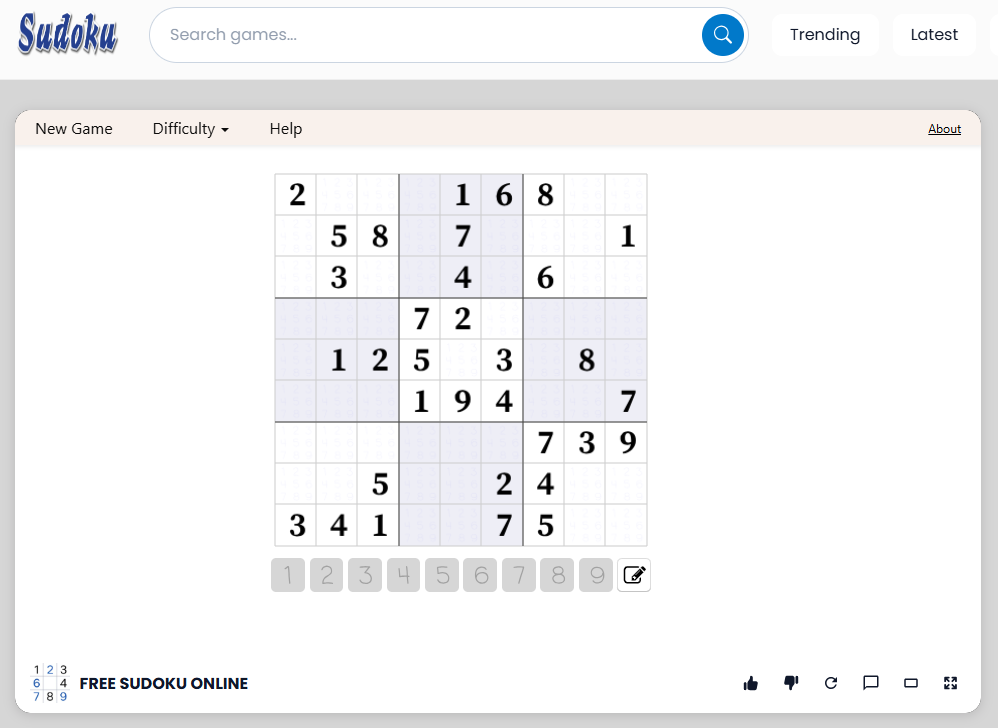
The classic Sudoku grid consists of nine rows, nine columns, and nine smaller sections. The objective is straightforward: fill every empty space with numbers from one to nine while ensuring that each number appears only once in every row, column, and section. Although the concept is easy to understand, solving a challenging puzzle can require significant concentration and skill.
Sudoku remains popular because it offers a perfect combination of entertainment and mental exercise. Every completed grid provides a sense of accomplishment, encouraging players to continue improving their abilities.
The History and Global Rise of Sudoku
Early Origins of Number Puzzles
The foundations of Sudoku can be traced back to mathematical puzzles that appeared centuries ago. Various forms of number-placement challenges existed long before the modern version became famous. These puzzles focused on arranging numbers according to specific rules, laying the groundwork for what would later become Sudoku.
The modern format gained attention through puzzle publications and newspapers. As more people discovered the game, its popularity expanded rapidly across different countries and cultures.
Worldwide Recognition and Success
Sudoku became a global phenomenon during the early twenty-first century. Newspapers, magazines, websites, and mobile applications introduced millions of people to the puzzle. Today, Sudoku can be found in countless formats, ranging from beginner-friendly grids to highly advanced challenges designed for expert players.
The accessibility of Sudoku has played a major role in its success. Anyone can learn the rules in just a few minutes, yet mastering advanced techniques can take years of practice.
How to Play Sudoku Successfully
Understanding the Basic Rules
Every Sudoku puzzle begins with a partially completed grid. Some numbers are already placed in specific locations, serving as clues for the player. The goal is to complete the remaining spaces while following three essential rules.
Each row must contain numbers one through nine without repetition. Each column must also contain numbers one through nine without repetition. Finally, each smaller three-by-three section must contain all nine numbers exactly once.
These simple guidelines create a surprisingly complex challenge that requires careful thinking and analysis.
Building Confidence Through Practice
New players often begin with easy puzzles. These puzzles provide enough clues to make logical deductions straightforward. As confidence grows, players can move to medium, hard, and expert-level puzzles.
Practice helps develop pattern recognition skills. Over time, players become more efficient at identifying possible placements and eliminating incorrect options. Consistent practice can significantly improve solving speed and accuracy.
Effective Strategies for Solving Sudoku
Scanning Rows and Columns
One of the most useful beginner techniques involves scanning rows and columns for missing numbers. By examining existing values, players can determine which numbers are possible for a particular space.
This method creates a strong foundation for more advanced strategies. Even experienced players rely on scanning techniques when approaching new puzzles.
Using Elimination Methods
Elimination is another powerful approach. Players analyze each empty space and remove impossible number choices based on surrounding values. As possibilities decrease, the correct solution becomes easier to identify.
Careful elimination often reveals opportunities that may not be immediately obvious. This technique helps maintain logical consistency throughout the solving process.
Recognizing Patterns
Advanced Sudoku players frequently search for recurring patterns within the grid. Certain arrangements of numbers can indicate where specific values must be placed. Recognizing these patterns improves efficiency and reduces guesswork.
Pattern recognition develops naturally through experience. The more puzzles a player completes, the easier it becomes to identify complex relationships between numbers.
Benefits of Playing Sudoku Regularly
Strengthening Logical Thinking
Sudoku encourages analytical reasoning and structured problem-solving. Every move requires evaluation and logical judgment. This process helps strengthen critical thinking skills that can be useful in many areas of daily life.
The puzzle teaches players to approach challenges methodically rather than relying on random decisions. Such habits can contribute to better decision-making and improved concentration.
Enhancing Focus and Attention
Modern life often includes constant distractions. Sudoku offers an opportunity to focus on a single task without interruption. Solving a puzzle requires sustained attention, making it an excellent exercise for mental discipline.
Many people enjoy Sudoku during breaks, commutes, or quiet moments because it provides a productive way to engage the mind.
Providing Relaxation and Enjoyment
Despite its intellectual challenge, Sudoku can also be relaxing. Concentrating on numbers and patterns allows players to temporarily disconnect from daily pressures. The sense of progress and achievement contributes to a satisfying and enjoyable experience.
For many enthusiasts, Sudoku serves as both entertainment and a healthy mental workout.
Digital Sudoku and Modern Accessibility
Mobile Applications and Online Platforms
Technology has transformed the way people enjoy Sudoku. Mobile applications and online platforms provide instant access to thousands of puzzles. Players can select difficulty levels, track progress, and receive hints when needed.
Digital versions often include features such as automatic error checking, note-taking tools, and daily challenges. These enhancements make the experience convenient and engaging for both beginners and experts.
Endless Variety of Puzzle Formats
Modern Sudoku is available in many variations. Some puzzles use larger grids, while others introduce unique shapes or additional rules. These variations keep the experience fresh and encourage players to explore new challenges.
The availability of diverse formats ensures that Sudoku remains exciting even for long-term enthusiasts.
Why Sudoku Continues to Attract Millions
Sudoku has maintained its popularity because it offers a rare combination of simplicity, challenge, and accessibility. The rules are easy to learn, yet the puzzle provides endless opportunities for growth and improvement. Every completed grid represents a small victory achieved through logic and perseverance.
Players appreciate Sudoku because it stimulates the mind while delivering genuine enjoyment. Whether solving a quick puzzle during a break or tackling an expert-level challenge over several hours, the experience remains rewarding.
Conclusion
Sudoku stands as one of the most enduring puzzle games ever created. Its logical structure, engaging gameplay, and cognitive benefits continue to attract players around the world. From beginners learning the basics to experienced enthusiasts mastering advanced techniques, Sudoku offers a meaningful and enjoyable challenge for everyone. With countless puzzles available in print and digital formats, Sudoku remains a timeless activity that combines entertainment, focus, and intellectual growth.

 English
 Arabic
 Spanish
 Portuguese
 Deutsch
 Turkish
 Dutch
Dutch
 Italiano
 Russian
 Romaian
 Portuguese (Brazil)
 Greek
Greek