
How International Medical Graduates Can Adapt Their Study Approach for the USMLE
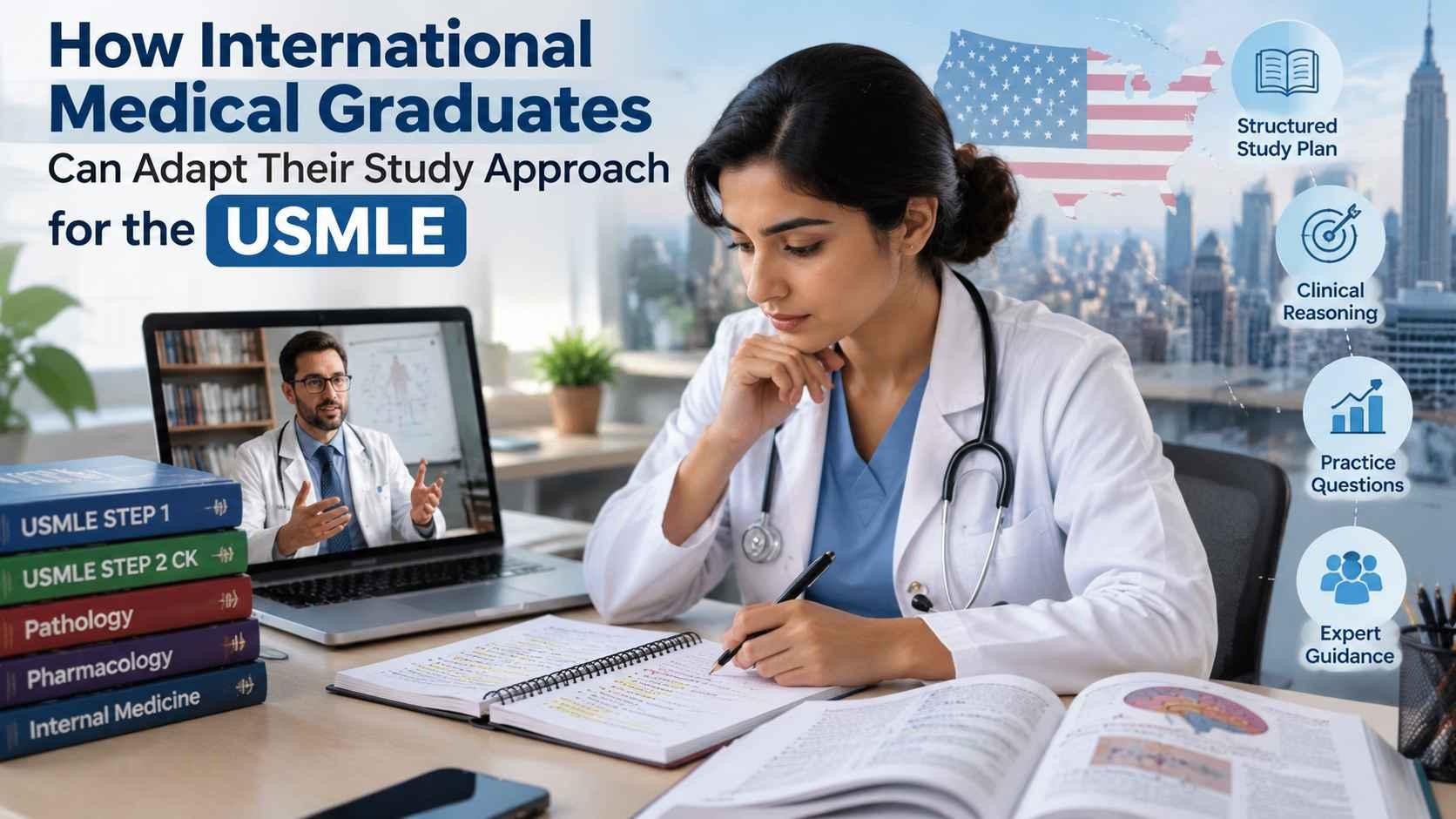
Preparing for the United States Medical Licensing Examination (USMLE) is a major transition for international medical graduates (IMGs). Unlike many medical school examinations that focus heavily on recall and theoretical understanding, the USMLE evaluates a student’s ability to apply clinical knowledge, interpret patient scenarios, and make evidence-based decisions.
For many IMGs, the challenge is not only learning medical concepts but also adapting to a different examination style, question format, and preparation strategy. A successful USMLE preparation approach requires structured planning, active learning methods, clinical reasoning development, and consistent practice with exam-style questions. Many candidates choose to work with experienced USMLE Tutors to better understand these differences and create a personalized study framework.
Why International Medical Graduates Need a Different USMLE Study Strategy
International medical graduates often enter USMLE preparation with strong medical foundations from their home institutions. However, the USMLE requires a shift from memorization-based learning toward application-focused reasoning.
The examination emphasizes:
- Clinical decision-making
- Integration of multiple medical disciplines
- Interpretation of laboratory findings and imaging
- Understanding disease mechanisms
- Applying guidelines to patient management
A student who performs well in medical school may still struggle initially because the USMLE requires familiarity with the way questions are structured.
For example, a question may not directly ask for the definition of a disease. Instead, it may describe a patient’s symptoms, history, physical examination findings, and laboratory results, requiring the candidate to identify the diagnosis and determine the next best step in management.
This difference means IMGs need to adjust their preparation approach early rather than simply increasing study hours.
How USMLE Tutoring Helps IMGs Build an Effective Preparation Plan
One of the biggest challenges for international students is creating a study schedule that balances content review, question practice, and revision. Structured guidance through USMLE Tutoring can help candidates identify their weaknesses, prioritize high-yield topics, and develop better study habits.
A personalized preparation approach usually focuses on:
1. Evaluating Current Knowledge Level
Before starting intensive preparation, IMGs should assess their current understanding of core subjects such as:
- Pathology
- Pharmacology
- Physiology
- Microbiology
- Anatomy
- Biochemistry
- Clinical medicine
Self-assessment exams, question banks, and practice tests can help determine which areas require additional attention.
Instead of spending equal time on every subject, students should allocate more time to topics where they consistently make mistakes.
2. Transitioning from Passive Learning to Active Learning
Many IMGs rely heavily on textbooks, lectures, and note-taking. While these resources provide important foundational knowledge, passive review alone is usually insufficient for USMLE success.
Active learning methods include:
- Solving question banks regularly
- Reviewing explanations carefully
- Creating concept connections
- Using spaced repetition techniques
- Revisiting weak areas repeatedly
The goal is not only to remember information but to understand how concepts appear in clinical scenarios.
3. Developing Question-Based Learning Skills
Question banks are among the most important resources during USMLE preparation. However, simply completing thousands of questions is not enough.
Students should analyze:
- Why the correct answer is correct
- Why other options are incorrect
- What clinical clues led to the diagnosis
- Which concepts need further review
This approach improves pattern recognition and clinical reasoning.
Many candidates preparing for Step 1 and Step 2 benefit from guidance from a USMLE Step 1 Tutor or USMLE Step 2 Tutor who can explain difficult concepts and demonstrate efficient problem-solving strategies.
Adjusting Study Methods for USMLE Step 1 and Step 2 CK
Although both examinations are part of the USMLE pathway, they require different preparation strategies.
Adapting for USMLE Step 1
USMLE Step 1 focuses on foundational medical sciences and how they relate to clinical practice. IMGs should focus on understanding mechanisms rather than memorizing isolated facts.
Important preparation areas include:
- Pathophysiology
- Pharmacological mechanisms
- Immunology
- Microbiology
- Genetics
- Biostatistics
Students should develop a strong conceptual foundation before attempting large volumes of practice questions.
A USMLE Step 1 & Step 2 Tutoring approach can also help candidates understand how foundational concepts connect with clinical decision-making throughout the licensing pathway.
Adapting for USMLE Step 2 CK
Step 2 CK focuses more heavily on clinical knowledge and patient management. IMGs must become comfortable with:
- Diagnosis selection
- Treatment decisions
- Preventive medicine guidelines
- Patient safety concepts
- Ethical scenarios
The preparation strategy should include extensive clinical question practice and review of management algorithms.
Students preparing for this stage often seek support from a Step 2 CK Prep Tutor to improve decision-making speed and exam confidence.
Creating a Realistic Study Schedule as an IMG
A common mistake among USMLE candidates is creating unrealistic schedules that focus only on long study hours. Effective preparation requires consistency and measurable progress.
A balanced study plan may include:
Daily Activities
- Reviewing high-yield concepts
- Completing question blocks
- Analyzing explanations
- Revising previous mistakes
- Practicing clinical scenarios
Weekly Activities
- Taking self-assessment exams
- Tracking performance trends
- Updating weak-topic lists
- Adjusting study priorities
The ideal schedule depends on factors such as medical background, available study time, examination timeline, and individual learning speed.
Common Mistakes IMGs Should Avoid During USMLE Preparation
Many international graduates face similar challenges during their preparation journey.
Relying Only on Memorization
The USMLE tests application, not simple recall. Understanding the reasoning behind concepts is essential.
Ignoring Practice Questions
Some students delay question banks until after completing all content review. This can create difficulty because USMLE questions require a specific thinking process.
Using Too Many Resources
Collecting multiple books, videos, and study tools can reduce efficiency. Candidates should focus on a limited number of high-quality resources and use them consistently.
Not Reviewing Mistakes
Incorrect questions provide valuable learning opportunities. A strong preparation strategy includes analyzing mistakes and identifying recurring patterns.
The Role of Personalized Support in USMLE Preparation
Every IMG has a different academic background, clinical exposure, and preparation timeline. A student who graduated recently may require a different approach compared with someone returning to medical studies after several years.
Personalized 1-on-1 USMLE Tutoring helps candidates receive targeted guidance based on their specific needs. This may include improving weak subjects, building study discipline, developing question-solving skills, and creating a realistic preparation roadmap.
With the increasing availability of online education, many students now choose Online USMLE Tutoring options that provide flexibility while maintaining structured academic support.
Building Confidence Through Consistent Improvement
USMLE preparation is a long-term process that requires patience, adaptability, and continuous evaluation. International medical graduates who adjust their learning methods, practice consistently, and focus on clinical reasoning are better positioned to handle the demands of the examination.
Rather than following a one-size-fits-all approach, candidates should develop a strategy that matches their strengths, weaknesses, and timeline. Professional guidance from experienced USMLE Tutors can help students refine their preparation process and stay focused throughout their journey.
Dedicated Prep supports medical students and international graduates by providing structured preparation resources and personalized learning guidance for candidates working toward their USMLE goals.
Frequently Asked Questions (FAQs)
1. How should international medical graduates start preparing for the USMLE?
IMGs should begin by assessing their current knowledge level, understanding the exam format, selecting reliable resources, and creating a structured study plan based on their timeline.
2. Is USMLE preparation different for international medical graduates?
Yes. IMGs often need to adapt from a memorization-focused learning style to an application-based approach that emphasizes clinical reasoning and patient management.
3. How can a USMLE Tutor help during preparation?
A USMLE Tutor can provide personalized guidance, explain difficult concepts, review mistakes, improve question-solving strategies, and help create an efficient preparation plan.
4. What is the difference between Step 1 and Step 2 CK preparation?
Step 1 focuses on foundational medical sciences and mechanisms, while Step 2 CK emphasizes clinical decision-making, diagnosis, and patient management.
5. Is online USMLE tutoring effective for IMGs?
Online USMLE tutoring can be effective when it provides personalized instruction, structured planning, regular feedback, and targeted support based on the student’s individual preparation needs.

 English
 Arabic
 French
 Spanish
 Portuguese
 Turkish
 Dutch
Dutch
 Italiano
 Russian
 Romaian
 Portuguese (Brazil)
 Greek
Greek