
How to Develop a Brand Knowledge Base for Better AI Search Visibility
As AI-powered search continues to change how people discover businesses, having accurate and accessible brand information is becoming increasingly important. Customers want clear answers about products, services, pricing, expertise, and company values. AI-powered platforms also rely on available information to generate responses to user questions.
A brand knowledge base can help businesses organize important information in one place, maintain consistency, and create a stronger foundation for Generative Engine Optimization (GEO).
Here is how to build an effective brand knowledge base that supports your digital presence.
1. Understand What a Brand Knowledge Base Is
A brand knowledge base is a structured collection of information about your business. It explains what your company does, who it serves, what it offers, and what makes it different.
It can include:
-
Company background and mission.
-
Product and service descriptions.
-
Industry expertise.
-
Frequently asked questions.
-
Technical documentation.
-
Customer support information.
-
Important policies and business details.
The goal is to make essential brand information easy to find, understand, and maintain.
2. Create a Clear Company Profile
Start with a detailed but straightforward description of your business. Explain your company's purpose, target audience, industry, and main offerings.
Avoid vague statements such as "We provide innovative solutions." Instead, describe exactly what your business does and the problems it helps solve.
For example, a software company should clearly explain its product category, intended users, primary applications, and relevant benefits.
A consistent company profile helps customers and other information sources understand your brand more easily.
3. Organize Product and Service Information
Your knowledge base should explain each major product or service separately.
Include important details such as:
-
Product or service name.
-
Main capabilities.
-
Intended audience.
-
Common use cases.
-
Technical requirements.
-
Available support resources.
-
Relevant limitations.
Use simple language and avoid unsupported promotional claims. Accurate descriptions help customers make informed decisions.
4. Build a Comprehensive FAQ Section
Frequently asked questions are a useful way to organize information around customer needs.
Think about the questions people ask before choosing your product or service. Organize them into relevant categories, such as pricing, features, implementation, support, and compatibility.
Provide direct answers and add additional explanations where necessary.
For example:
What problem does your product solve?
Explain the specific challenge your product addresses and how customers can use it.
Who is your product designed for?
Identify the businesses, professionals, or audiences that are most likely to benefit.
How can customers get support?
Explain the available support channels and where users can find assistance.
5. Keep Information Consistent Across Platforms
Your website should not be the only place where important brand information appears.
Review relevant business directories, professional profiles, social media pages, industry publications, and other platforms where your company is represented.
Make sure essential details such as your company name, website, product descriptions, and business information are accurate.
Consistency helps reduce confusion and creates a more reliable digital identity.
6. Use Structured Content and Clear Navigation
A knowledge base should be easy to explore. Organize information into logical categories and use descriptive headings.
For larger knowledge bases, consider adding:
-
A searchable content library.
-
Dedicated topic pages.
-
Internal links between related articles.
-
Clear category labels.
-
Updated publication dates.
-
Links to supporting documentation.
Structured content improves the experience for visitors and makes important information easier to navigate.
7. Update Your Knowledge Base Regularly
Business information changes over time. Products receive updates, services evolve, policies change, and new customer questions emerge.
An outdated knowledge base can create confusion and reduce trust.
Set a regular review schedule. Assign responsibility for updating important pages and remove information that is no longer accurate.
When making significant product or service changes, update the relevant resources as soon as possible.
8. Connect Your Knowledge Base with GEO
Generative Engine Optimization focuses on improving how brands and their information are discovered across AI-powered search experiences.
A well-maintained knowledge base can support GEO by providing clear explanations, consistent terminology, and useful information about your business.
To strengthen this connection:
-
Answer relevant industry questions.
-
Explain products and services clearly.
-
Publish original educational resources.
-
Maintain accurate company information.
-
Link related topics together.
-
Support factual claims with reliable references.
These practices can improve the quality of your digital presence, although they cannot guarantee that AI platforms will cite or recommend your brand.
9. Monitor Your Brand's AI Search Presence
After organizing your information, examine how your brand appears in AI-powered search experiences.
Try different questions related to your business, products, and industry. Look for incorrect descriptions, missing information, and opportunities to provide better explanations.
This process can help you identify gaps between what your company communicates and what people may discover online.
How Lunocode Helps You Explore AI Visibility
Creating a brand knowledge base is one step toward building a clearer and more consistent online presence. Businesses should also understand how their information appears across changing AI-powered discovery experiences.
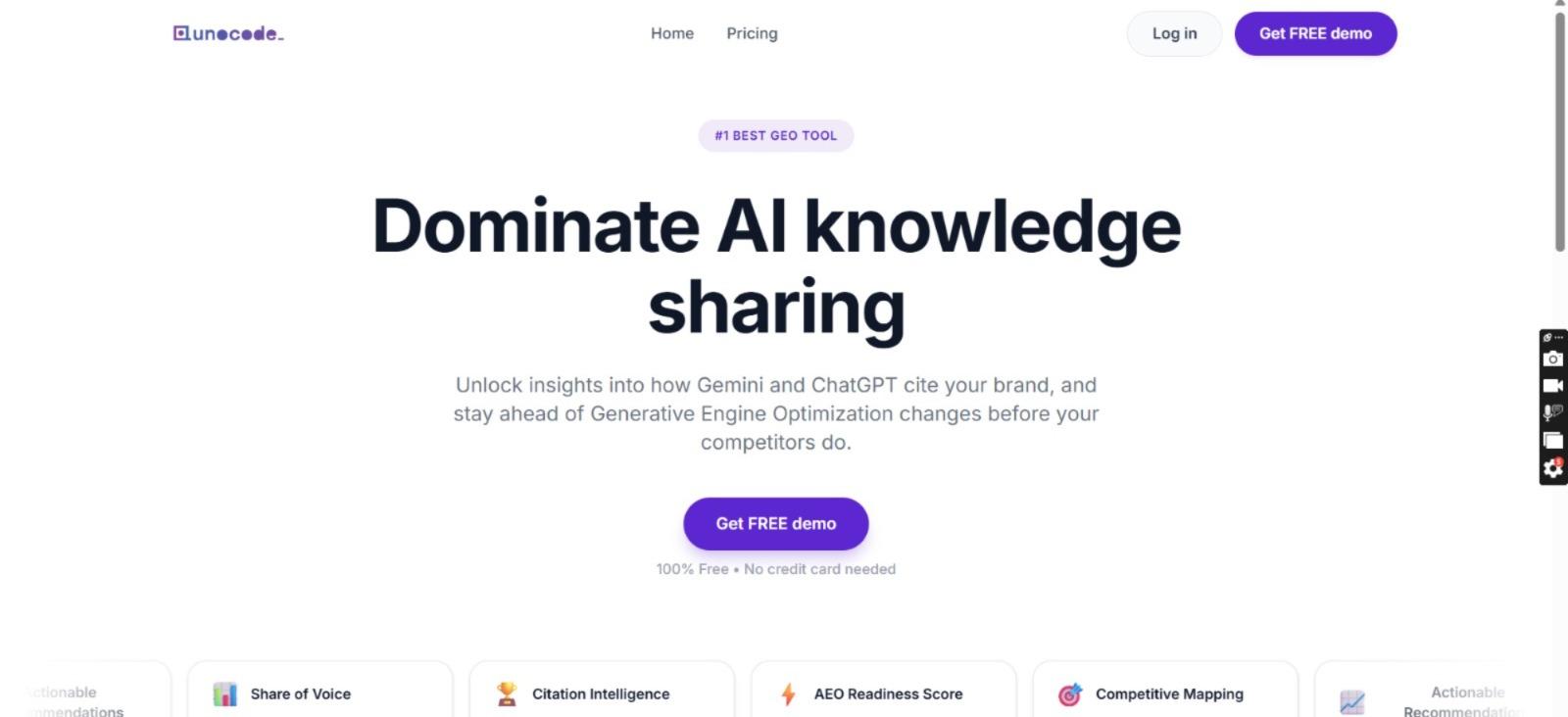
Lunocode — GEO Tool for AI Visibility helps businesses explore their brand presence in AI search and identify opportunities to strengthen their visibility.
With a focus on GEO, Lunocode supports a more informed approach to understanding brand discovery and improving digital content strategies.
Explore Lunocode: https://lunocode.eu/
Conclusion
A strong brand knowledge base makes business information easier to understand, maintain, and discover. By organizing company details, publishing helpful answers, maintaining consistency, and updating resources regularly, businesses can build a more reliable digital foundation.
As AI-powered search continues to evolve, clear and useful brand information will remain an important part of an effective GEO strategy.
Website = https://lunocode.eu/

 English
 Arabic
 French
 Spanish
 Portuguese
 Deutsch
 Turkish
 Dutch
 Italiano
 Russian
 Romaian
 Greek