
How Resistance Welding Machines Elevate Connector Assembly
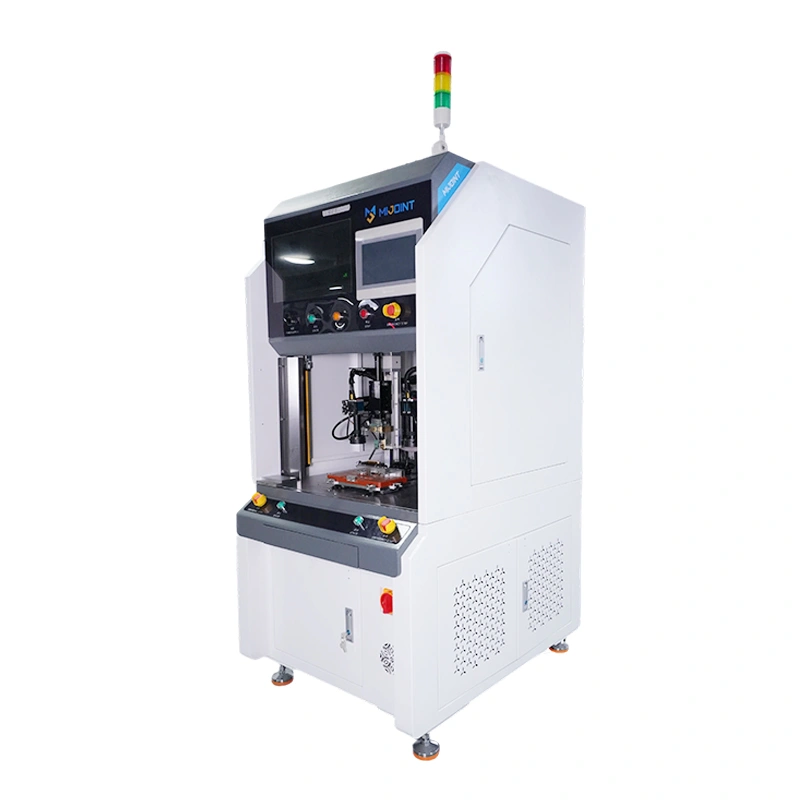
The Resistance Welding Machine for connector assembly is one of those industrial tools that looks deceptively simple at first glance. Yet the more time I’ve spent around these machines—watching operators tune parameters, observing weld quality under microscopes, and listening to engineers debate electrode geometry—the more I’ve realized how much quiet sophistication hides inside this equipment. In connector manufacturing, where reliability is everything, the machine becomes the silent guardian of electrical stability.Get more news about Resistance Welding Machine for Connector Assembly,you can vist our website!
What Defines the Machine’s Character
A resistance welding machine has a very distinct personality. It doesn’t rely on flames or filler materials; instead, it uses controlled electrical current and pressure to fuse metal parts. This makes it incredibly clean and efficient. The welds it produces are compact, consistent, and mechanically strong—exactly what delicate connectors need.
What stands out most is the repeatability. Once parameters are dialed in, the machine behaves like a metronome. Every weld pulse is nearly identical to the last. In industries where a single faulty connector can cause system failure, this predictability is priceless.
The Rhythm of the Welding Process
Watching the machine operate feels almost like observing a choreographed routine. The electrodes descend, pressure builds, current flows, and the joint forms—all in milliseconds. There’s no dramatic spark shower, no loud crackle. Just controlled energy doing its job.
This quiet precision is what makes the process so appealing. The machine doesn’t demand attention; it simply delivers results. And yet, behind that calm exterior, there’s a lot happening. Sensors monitor current waveforms, electrode force, displacement, and thermal behavior. Modern machines are essentially miniature quality-control systems built into the production line.
Features That Make It Stand Out
High process stability — The machine maintains consistent weld parameters even during long production runs.
Energy efficiency — Short bursts of current mean lower energy consumption compared to other welding methods.
Compact weld formation — Ideal for micro-connectors where space is extremely limited.
Real-time monitoring — Advanced models track every weld, storing data for traceability and quality audits.
Automation compatibility — These machines integrate smoothly into robotic or semi-automated assembly lines.
These features aren’t just technical bullet points—they directly influence product reliability. When you’re dealing with connectors used in automotive harnesses, medical devices, or communication systems, the weld quality isn’t just a manufacturing detail; it’s a safety factor.
My Personal Impressions
What I appreciate most is how the machine balances automation with craftsmanship. Yes, it’s highly automated, but the human role isn’t diminished. Operators still adjust electrode shapes, fine-tune squeeze times, and evaluate weld nuggets under magnification.
I’ve seen technicians treat electrode maintenance almost like a ritual. A worn electrode can change heat distribution, weaken weld strength, or distort tiny connector components. So even though the machine is precise, the human touch remains essential.
Challenges That Reveal Its Complexity
No machine is perfect, and resistance welding has its quirks:
Electrode maintenance is constant—wear and contamination affect weld quality.
Material sensitivity — Plated surfaces or mixed metals require careful parameter tuning.
Heat management — Excess heat can deform small connector housings or damage insulation.
These challenges don’t undermine the machine’s value; they highlight why skilled technicians matter. The machine provides the power and precision, but humans provide judgment.
Why It Still Matters Today
In an era where laser welding and advanced bonding technologies are gaining attention, resistance welding remains surprisingly relevant. Connectors are becoming smaller and more complex, yet they still need strong, conductive joints. Resistance welding offers a combination of speed, reliability, and cost-efficiency that newer technologies haven’t fully replaced.
Its biggest advantage is predictability. A well-maintained machine produces welds that behave the same way today, next month, and next year. In manufacturing, that consistency is gold.
Looking Toward the Future
I believe the next evolution will be smarter control systems—machines that adjust current in real time based on material temperature, or integrate machine vision to inspect welds automatically. Some of this already exists, but the integration is still developing.
As connectors continue to shrink and performance demands rise, resistance welding machines will likely become even more intelligent, acting less like tools and more like collaborative partners in quality assurance.

 English
 Arabic
 French
 Spanish
 Portuguese
 Deutsch
 Turkish
 Dutch
 Italiano
 Romaian
 Portuguese (Brazil)
 Greek